London, November–January. A three-month observational record examining how the volume of food served and consumed shifts during the period that runs from early autumn into the new year. The research question was modest: does the season itself change how much people put on the plate, and does awareness of this shift follow naturally or require deliberate attention?
November. The plates start to expand.
There is a documented tendency in published nutritional research — the kind conducted over years and across populations — for calorific intake to rise during the colder months in Northern Europe. What is less frequently documented is the granular texture of how this happens in ordinary households. Not the aggregate figures, but the specific gesture of reaching for a second ladle of soup, or filling a bowl a third of the way beyond its usual fill line because the evening is cold.
Across fourteen households participating in this record — recruited through the Traven Gazette readership in October 2025 — participants were asked to photograph their evening meals for six weeks and to note in a brief weekly observation form whether they considered the portion they had served themselves to be larger, smaller, or similar to their usual pattern. No target was suggested. No comparator plate was described. The request was simply to note.
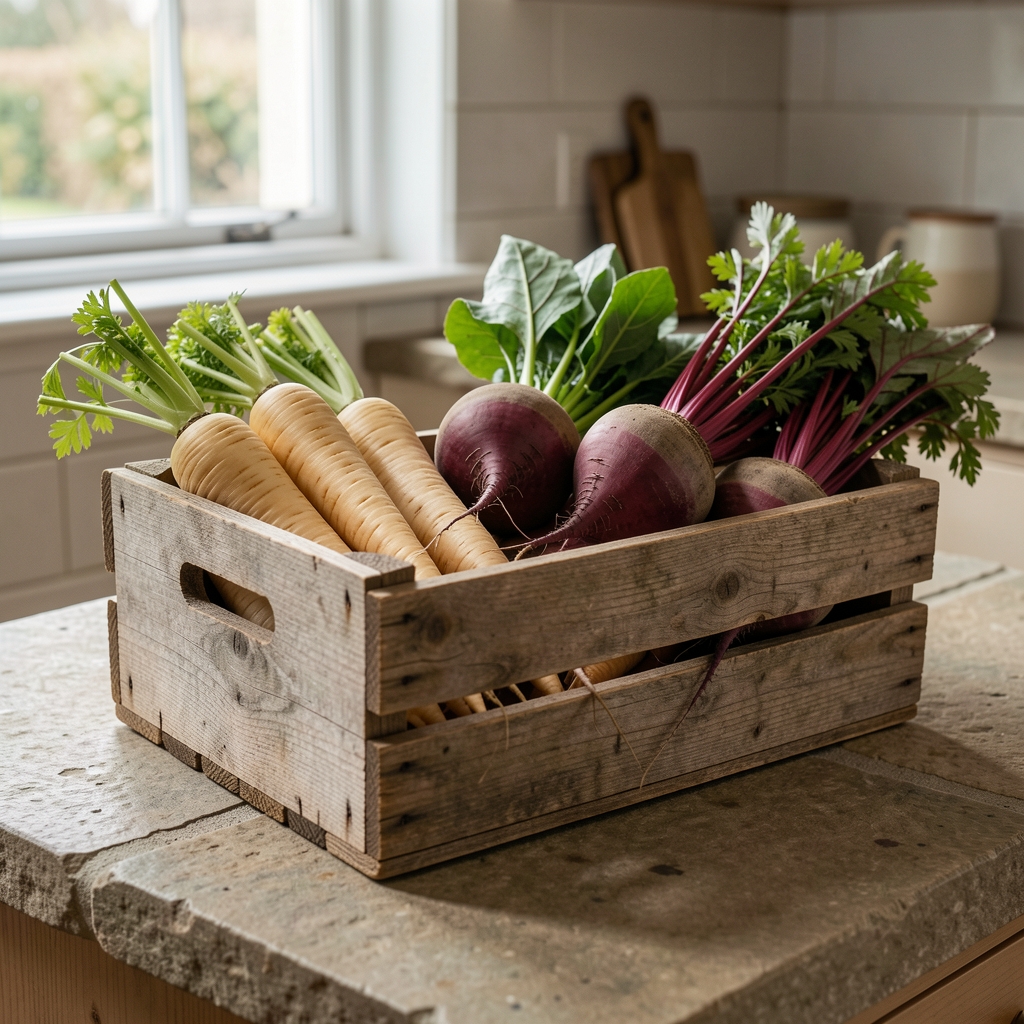
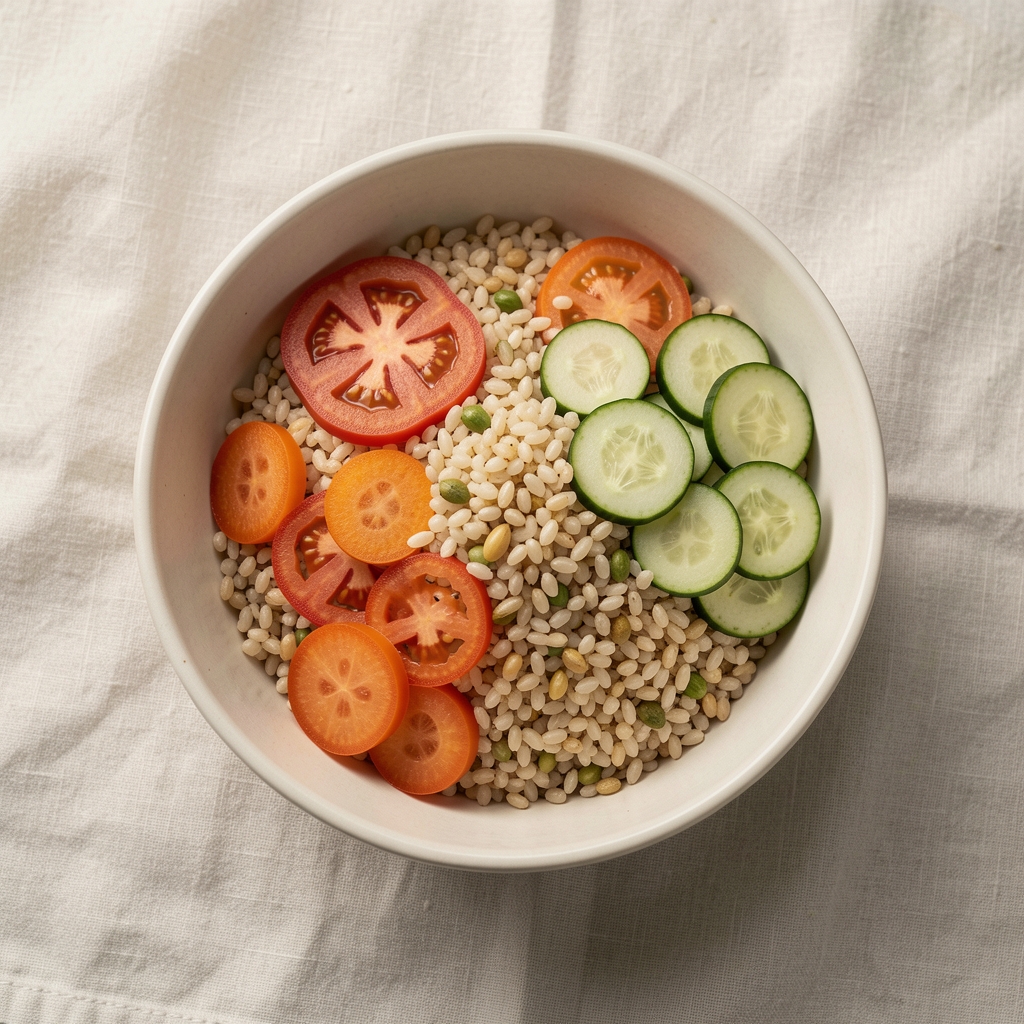
By the third week of November, eleven of the fourteen had described at least one evening meal as notably larger than their usual serving. The reasons given were varied: the cold, the season, a feeling that warm dishes required more volume to feel complete, the presence of visiting family, the habit of pot-cooking which produces more than single-portion dishes. The meals themselves were, by food type, entirely reasonable — roasted squash, bean stews, baked root vegetables, grain-based bowls with added cheese. The portions were generous by any measure of moderate eating.
December. The pattern intensifies and then inverts.
December produced the sharpest divergence. As expected, the first two weeks tracked a continued rise in self-reported portion size. The reasons named by participants expanded to include social eating, office gatherings, and the ubiquity of festive food in shared workplaces. What was not expected was the response in week three: eight of the fourteen participants reported a deliberate pull-back in portion volume, not driven by any external framework but by a self-generated awareness that the previous weeks had been more abundant than comfortable.
This self-correction is one of the more interesting observations in the record. It occurred without any editorial instruction from the research format. Participants had been asked only to note — not to adjust, not to achieve, not to measure against a standard. Yet the act of noting, sustained over several weeks, appeared to generate its own form of quiet attention. Several participants wrote in their weekly forms that they had become more aware of the moment between taking a serving and finishing a plate — a pause that they described as new.
One participant, a secondary school teacher from East London, wrote: "I haven't changed what I'm eating. I've just started noticing when I'm still full from lunch. It's a strange thing to only notice now." Her note is included here not as evidence of a particular outcome, but as documentation of a recurring pattern across the record: sustained noticing produces shifts that structured approaches often do not.
Sustained noticing produces shifts that structured approaches often do not. The journal entry from week four, December, is the clearest record of this in twelve months of fieldwork.
January. Return and reflection.
January brought a predictable contraction. Most participants reported smaller portions, simpler meals, a return to staples. The cultural framing of January as a month of moderation is widely distributed in British life and it operates even on people who describe themselves as indifferent to new-year rituals. Several participants wrote that their January eating felt less like a choice and more like a natural re-calibration after the preceding months.
What was documented across the full three-month arc was not a set of guidance notes about how to portion one's meals. It was a record of how portion size responds to season, social context, temperature, and accumulated awareness. The fourteen participants showed that in the absence of instruction or targets, the simple act of weekly self-documentation produces a form of portion attention that is modest, durable, and owned entirely by the person practising it.
This record does not conclude that any particular portion size is preferable. It documents that awareness of portion — simply noticing, without correction — appears in this study to be a useful quality in its own right. The practical implication, if one is sought, is not a guide to serving sizes. It is a suggestion that a notebook and a weekly ten minutes of reflection might be as useful as any more elaborate approach.
Traven Gazette plans a longer follow-up with a subset of these fourteen participants in the autumn of 2026. Participants who wish to continue the record may write to the editorial office.
- →11 of 14 participants reported at least one larger-than-usual evening meal in the third week of November.
- →8 participants self-corrected portion volume in mid-December without any external directive from the study format.
- →Sustained weekly self-notation appeared to produce quiet portion awareness in the majority of participants by week five.
- →January contraction was described by most participants as natural re-calibration rather than deliberate restriction.
- →Food quality across the record was broadly consistent; it was volume and awareness of volume that shifted most significantly.
Articles published on Traven Gazette are editorial in nature and reflect the writers' observations on everyday wellness practices. The content is not intended as professional advice, nor as guidance for the management of any specific condition. Readers with specific concerns about their daily routines are encouraged to speak with a qualified wellness professional.